NASA recasts Artemis III as Earth-orbit test, keeps 2028 target for Moon landing
NASA said Oct. 23 that Artemis III will now test both commercial lunar landers in low Earth orbit in 2027, with either SpaceX or Blue Origin eligible to carry astronauts to the Moon in 2028.
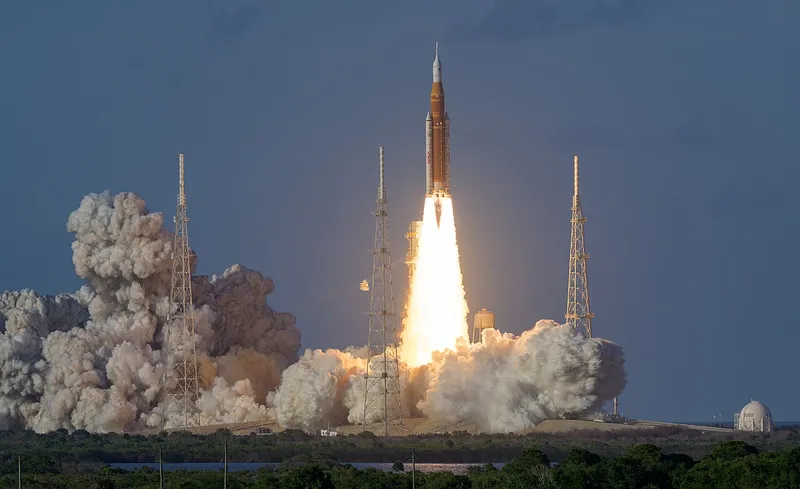
NASA has reworked its plan for returning astronauts to the Moon. Artemis III, which the original lander contracts had paired with SpaceX’s Starship, will instead fly four astronauts in low Earth orbit next year to test both commercial landers. The agency is still aiming to put Americans back on the lunar surface in 2028.
Officials laid out the changes at a news conference at Kennedy Space Center in Florida on Friday, Oct. 23. Taking part were NASA Administrator Jared Isaacman, Associate Administrator Amit Kshatriya and Artemis program manager Jeremy Parsons. NASA describes Artemis IV as the first Artemis mission planned to land on the Moon.
A new job for Artemis III
According to NASA’s mission overview, Artemis III will be a 14-day flight. Three spacecraft will go up on three different heavy-lift rockets in a short span. First comes a test version of Blue Origin’s Blue Moon Mark 2 lander. Days later, once the lander is confirmed healthy, Orion will launch on NASA’s Space Launch System from Kennedy.
The crew will dock Orion with the Blue Moon test article and spend about two days working aboard it, checking the cabin environment, controls and life support. SpaceX will then launch a Starship Version 3 test article fitted with a docking system. Orion will dock with it for up to two hours, but the astronauts will not go inside Starship, NASA said. The mission is to end with a splashdown in the Pacific Ocean off California, followed by recovery by NASA and the U.S. Navy.
The crew named for the mission is NASA astronauts Randy Bresnik, Frank Rubio and Andre Douglas, along with European Space Agency astronaut Luca Parmitano.
“Every piece of this mission in Earth orbit is designed to reduce risk before we put astronauts back on the Moon,” Parsons said in the agency’s release.
Landers no longer tied to specific missions
NASA also changed how it will use its two human landing system contractors. The original contracts assigned SpaceX’s Starship to Artemis III and IV and Blue Origin’s Blue Moon Mark 2 to Artemis V. Under the new approach, neither lander is assigned to a particular landing mission. NASA will pick which company flies astronauts down first in 2028 based on lander readiness, and a second crewed landing opportunity will follow.
The agency dropped the plan to have landers and Orion meet in a near-rectilinear halo orbit around the Moon. Each company will now meet Orion in an orbit suited to its own system:
- SpaceX will fill a “depot” Starship using propellant brought up by several tanker Starships. The Starship lander will wait for Orion in Earth orbit and then push the combined stack to low lunar orbit. NASA is modifying Orion so it can make that trip.
- Blue Origin will put off in-space propellant transfer. It will use three transfer stages, built from existing hardware, to send its lander to an elliptical polar orbit around the Moon.
Both companies must complete an uncrewed demonstration before carrying a crew, and NASA must certify each lander before any crewed flight. On each landing, two astronauts are to descend near the lunar South Pole while two stay aboard Orion. The first surface missions plan two moonwalks of about two hours each, including sample collection and tests of Axiom Space spacesuits, according to NASA.
“NASA has no intention of sitting idly by as all the pieces come together,” Isaacman said in the agency’s announcement.
After Artemis II
The overhaul follows Artemis II, which launched April 1 and splashed down off California on April 10. That mission sent NASA astronauts Reid Wiseman, Victor Glover and Christina Koch and Canadian astronaut Jeremy Hansen around the Moon. On Oct. 7, NASA released more than 800 gigabytes of lunar science data from the flight, along with more than 11,000 full-resolution images and videos.
NASA did not give a specific launch date for the reworked Artemis III.
Sources
- NASA, Partners Accelerate Lander Development for 2028 Moon Missions, NASA, Oct. 23, 2026.
- NASA's Artemis III Mission to Test Future Moon Lander Operations, NASA, Oct. 23, 2026.
- NASA Shares Artemis Acceleration Plans for Moon Missions, NASA, Oct. 23, 2026.
- Artemis II Crew Return, NASA, April 15, 2026.
- NASA Releases Artemis II Lunar Science Data, Images, NASA, Oct. 7, 2026.
Patriot Today Editorial reports from primary documents and named sources. Spotted an error? Write to info@atlasmedianetwork.org — see our corrections policy.