Heating oil households face 21% higher winter bills as diesel tops $6, EIA says
The Energy Information Administration expects natural gas and propane heating bills to fall this winter, while tight distillate supplies push heating oil costs up sharply, mostly in the Northeast.
Americans who heat with natural gas or propane should spend less this winter than last, but households that burn heating oil are in for a steep increase, according to the federal government’s Winter Fuels Outlook, released Oct. 6 by the U.S. Energy Information Administration (EIA).
The agency projects that the average household heating mainly with natural gas will spend $640 this winter, down 9% from last year. Propane households are expected to spend $1,246, down 3%. Homes heated by electricity are forecast to pay $1,196, up 4%, as residential power prices rise about 3%.
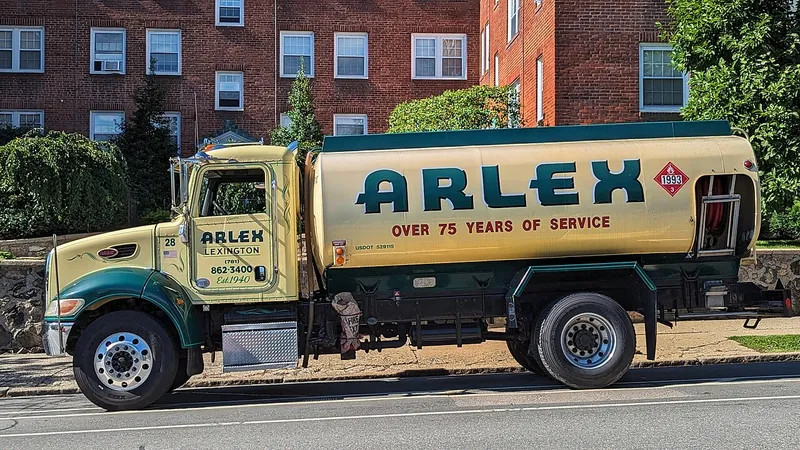
Heating oil is the outlier. EIA expects homes that rely on it to spend an average of $2,115, a 21% jump, with the fuel’s price forecast at $5.26 a gallon for the season, up 34% from last winter. Those households make up about 3% of the U.S. total and are concentrated in the Northeast, the agency said in its accompanying press release.
“Relatively high natural gas inventories entering the winter season provide a cushion for heating demand,” EIA Administrator Tristan Abbey said in the release. He added that heating oil customers face higher prices because distillate markets remain tight.
Tight distillate supply
Heating oil and diesel are both distillate fuels, and supplies are thin heading into the cold months. EIA said East Coast distillate inventories were 32% below their five-year seasonal average in September and are forecast to remain 20% to 30% below average through the winter, according to the October Short-Term Energy Outlook.
Weekly price data show the squeeze is already reaching consumers. The national average retail price of on-highway diesel was $6.276 a gallon on Oct. 19, up nearly 10 cents from the prior week and $2.656 higher than a year earlier, according to EIA’s Gasoline and Diesel Fuel Update. Diesel rose in every region tracked; California drivers paid $8.242 a gallon.
Residential heating oil averaged $6.190 a gallon nationally on Oct. 19, up $2.664 from a year ago, EIA’s Heating Oil and Propane Update shows. In New England the price was $6.112. Residential propane averaged $2.689, up about 26 cents from last year.
Gasoline has eased slightly. The national average for regular was $4.284 on Oct. 19, down almost 5 cents from the week before but $1.265 above a year earlier.
Middle East disruptions behind the run-up
EIA ties the higher oil prices to an ongoing conflict in the Middle East that has involved attacks on oil infrastructure and tankers. In its global oil market analysis, the agency said production shut in by the disruption peaked at 10.9 million barrels per day in May and averaged an estimated 4.8 million barrels per day in September. It cited September attacks on Saudi Arabia’s East-West pipeline, which temporarily halted flows on a route that bypasses the Strait of Hormuz.
The benchmark Brent crude price averaged $114 a barrel in September. EIA now forecasts Brent at $105 in the fourth quarter, $14 higher than its September forecast, before easing to an average of $84 in 2027 as regional output recovers, according to the Short-Term Energy Outlook. The agency expects retail diesel to stay above $6 a gallon in October and to average about $4.50 next year, its press release said.
U.S. producers are expected to keep growing output. EIA forecasts domestic crude production at 13.9 million barrels per day in 2026 and 14.3 million in 2027, and liquefied natural gas exports at 17.6 billion cubic feet per day this year, up from 15.1 billion in 2025.
Weather is the wild card
EIA’s base case assumes national temperatures similar to last winter, but the regional picture varies. The Northeast is forecast to have 12% fewer heating degree days than last year’s relatively cold winter, which partly offsets heating oil’s price increase; EIA expects natural gas spending in the region to fall 14%. The West is forecast to have 25% more heating degree days after an unusually warm winter, and EIA expects natural gas spending there to rise 7% and electricity spending 9%, the largest regional increase.
The agency cautioned that a strong El Niño could produce large swings from its base case. All of its figures are in nominal dollars, and EIA assumes inflation of about 2%. Its next Short-Term Energy Outlook is scheduled for Nov. 10.
Sources
- Winter Fuels Outlook 2026-27, U.S. Energy Information Administration, Oct. 6, 2026.
- EIA expects a mixed picture for winter fuel costs this year, U.S. Energy Information Administration, Oct. 6, 2026.
- Short-Term Energy Outlook, October 2026, U.S. Energy Information Administration, Oct. 6, 2026.
- Short-Term Energy Outlook: Global Oil Markets, U.S. Energy Information Administration, Oct. 6, 2026.
- Gasoline and Diesel Fuel Update, U.S. Energy Information Administration, Oct. 20, 2026.
- Heating Oil and Propane Update, U.S. Energy Information Administration.
Patriot Today Editorial reports from primary documents and named sources. Spotted an error? Write to info@atlasmedianetwork.org — see our corrections policy.